Cloud 3.0: The Rise of Sovereign and Hybrid “Flavor” Clouds
The cloud computing landscape is evolving rapidly, and we are now entering a new era known as Cloud 3.0. This next phase goes beyond basic cloud adoption and focuses on flexibility, control, and compliance. Businesses today are no longer satisfied with one-size-fits-all solutions. Instead, they demand customized environments that align with their operational, regulatory, and security needs—this is where it comes into play.
What is Cloud 3.0?
It represents the third generation of cloud computing, emphasizing intelligent, distributed, and highly customizable cloud ecosystems. Unlike earlier models, it integrates sovereign cloud principles and hybrid architectures to give organizations greater control over their data and infrastructure.
In simple terms, it is about creating “flavor clouds”—tailored cloud environments designed for specific industries, geographies, or business requirements.
The Rise of Sovereign Clouds
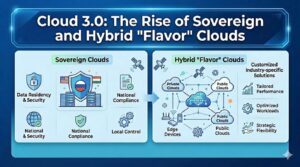
One of the defining features of it is the emergence of sovereign clouds. These are cloud environments that comply with local data laws and ensure that data remains within a specific country or jurisdiction.
With increasing concerns around data privacy and regulations, it enables organizations to:
- Maintain data residency compliance
- Enhance security and governance
- Build trust with customers and regulators
Sovereign clouds are especially critical for industries like finance, healthcare, and government, where data sensitivity is high. This makes it a key enabler for regulatory compliance.
Hybrid “Flavor” Clouds Explained
Another major innovation in it is the concept of hybrid “flavor” clouds. These combine public cloud scalability with private cloud control, offering the best of both worlds.
Hybrid flavor clouds allow businesses to:
- Customize infrastructure based on workloads
- Optimize cost and performance
- Seamlessly integrate legacy systems with modern applications
With it, companies can design cloud environments tailored to specific needs—whether it’s AI workloads, DevOps pipelines, or data analytics platforms.
Why Cloud 3.0 Matters for Businesses
The shift to Cloud 3.0 is not just a technological upgrade—it’s a strategic transformation. Organizations adopting it gain:
- Greater flexibility and agility
- Improved data sovereignty and compliance
- Enhanced security frameworks
- Better workload optimization
In today’s competitive landscape, it empowers businesses to innovate faster while staying compliant with global regulations.
Key Trends Driving Cloud 3.0
Several trends are accelerating the adoption of it:
- Data Localization Laws – Governments demanding stricter data control
- Multi-Cloud Strategies – Businesses using multiple cloud providers
- Edge Computing Growth – Processing data closer to the source
- AI and Automation – Intelligent cloud operations
These trends highlight why it is becoming the foundation of modern IT infrastructure.
Challenges in Cloud 3.0 Adoption
While it offers many benefits, it also comes with challenges:
- Complexity in managing hybrid environments
- Higher initial setup costs
- Need for skilled cloud professionals
However, with the right strategy and tools, organizations can overcome these challenges and fully leverage it.
The Future of Cloud 3.0
Looking ahead, Cloud 3.0 will continue to evolve with advancements in AI, security, and automation. We can expect more industry-specific cloud solutions and deeper integration between sovereign and hybrid models.
As businesses demand more control and customization, Cloud 3.0 will redefine how organizations build, deploy, and manage applications.
Conclusion
Cloud 3.0 is not just a trend—it’s the future of cloud computing. By combining sovereign and hybrid “flavor” clouds, it offers unmatched flexibility, security, and compliance. Organizations that embrace Cloud 3.0 today will be better positioned to innovate and scale in tomorrow’s digital world.